
Hiratsuka: Kanagawa’s Underrated Beach Town and Its Famous Tanabata Festival
Overview
Ask most visitors to name a beach town in Kanagawa and they will say Kamakura or Enoshima. I did the same until a local surfer told me to take the train one more stop: “Hiratsuka has the same ocean, half the people, and a festival that puts Kamakura’s to shame.”
She was not exaggerating. Hiratsuka sits on the western edge of the Shonan coast, roughly 70 minutes from Tokyo on the JR Tokaido Line. It is a genuine working town — fishing boats, surf shops, and a beach that stretches for more than a kilometer — rather than a purpose-built tourist strip. The sand is wide and uncrowded even on summer weekends, the sunsets over Sagami Bay are among the best in the prefecture, and every August the city transforms for one of the three great Tanabata festivals of Japan.
That festival is the hook, but Hiratsuka rewards visitors in every other season too. In spring there are cherry blossoms along the Sagami River. In autumn the surf is at its best and the crowds vanish. And year-round, the town’s claim to culinary fame — fresh shirasu (whitebait) from the local fishing fleet — is served in ways that put the more famous Shonan towns to shame.
This guide covers the Tanabata festival in detail, the beach and its activities, where to eat, and how to build a Hiratsuka day trip that avoids the Shonan crowds entirely.

📍 Getting There
Hiratsuka Station sits on the JR Tokaido Line, which makes access embarrassingly simple.
From Tokyo
- JR Tokaido Line Rapid from Tokyo Station (60-70 min, ¥1,020) — The direct rapid service stops at Hiratsuka. This is the fastest and cheapest route.
- JR Tokaido Line via Yokohama (75 min, ¥1,100) — If you are already in Yokohama, change at Yokohama Station onto the Tokaido Line. Frequency is excellent.
- Odakyu Line via Shonan (85 min, ¥1,200) — From Shinjuku, take the Odakyu to Fujisawa or Katase-Enoshima, then transfer to the Shonan Monorail or local lines. Slower, but useful if you are combining Hiratsuka with an Enoshima visit.
Getting to the Beach
The main beach area (Hiratsuka Beach / Kokufu Beach) is a 15-minute walk or 5-minute bus ride from the station’s south exit. During the Tanabata festival, the station area and the approach to the beach are filled with festival stalls, so walking is both easiest and most enjoyable.
Money-Saving Tickets
There is no special pass required for Hiratsuka itself. If you are coming from Tokyo, a standard round-trip Tokaido Line ticket is cheapest. For visitors combining Hiratsuka with the wider Shonan coast, the Enoshima and Kamakura day trip options include transport that can be adapted, though most travelers simply buy point-to-point tickets at the window.

🎋 The Tanabata Festival: Japan’s Three Great Tanabata
What Makes Hiratsuka’s Festival Special
Hiratsuka Tanabata is one of the three great Tanabata festivals of Japan, alongside Sendai and Ise. It began after World War II as a symbol of recovery, and today it draws around 300,000 visitors over three days in early August. The signature is the giant kazari — elaborate, colorful paper decorations, some several meters tall, that hang from storefronts and arch across the main shopping streets.
I walked through the festival on the second day of last year’s event and the scale genuinely surprised me. The main drag from the station toward the beach becomes a pedestrian-only corridor packed with stalls selling everything from takoyaki to goldfish scooping. The kazari above your head are the stars: handcrafted works with flowers, dancers, and constellations, each one made by local shops and schools.
Festival Details
- Dates: Early August, usually a Friday through Sunday. Check the official city calendar each year as dates shift.
- Location: Hiratsuka Station north exit, along the main shopping street (Chuo-dori) and its side alleys.
- Highlights: The kazari displays, evening yosakoi and dance performances, fireworks on the final night (the Hiratsuka beach fireworks, separate from the festival but often adjacent), and food stalls numbering in the hundreds.
- Crowd strategy: Go early (before 11:00) or in the evening after 17:00. Midday is the most crowded. The final evening’s fireworks draw the largest crowd, so stake out a spot on the beach by 18:00.
Practical Notes
- Wear comfortable shoes; you will walk several kilometers without noticing.
- Cash is king at festival stalls — most do not take cards.
- Bring a small fan and water; early August in Hiratsuka is hot and humid.
- The festival runs rain or shine, but heavy rain reduces the kazari displays.

🏖️ The Beach: Shonan Without the Crowds
Hiratsuka Beach and Kokufu Beach
Hiratsuka’s coastline is a continuous strip of sandy beach roughly 1.5 kilometers long, divided into two named sections: Hiratsuka Beach (east) and Kokufu Beach (west). Both offer wide, gently sloping sand that is ideal for swimming and family days.
The thing that sets Hiratsuka apart from Kamakura’s beaches is space. On a sunny Saturday in July, Yuigahama in Kamakura can be shoulder-to-shoulder; Hiratsuka’s equivalent is comfortably busy. The water is similar — the same Sagami Bay — and the swimming season runs the same July-through-August window.
What to Do on the Beach
- Swimming — Designated swimming areas are set up from early July to late August, with lifeguards and rope boundaries. The water is calm and clear on most days.
- Surfing — Hiratsuka is a legitimate surf spot with several long-standing surf shops renting boards and offering lessons. The waves are smaller and softer than Chigasaki’s, making it a good place to learn. See the Shonan surfing guide for a full rundown of the coast’s breaks.
- Beach houses — During summer, rows of beach houses (uminoie) open serving simple meals, drinks, and shower facilities. Try the local shirasu bowls here for a quick lunch.
- Sunset watching — This is Hiratsuka’s underrated specialty. The beach faces due south-west, so sunsets unfold directly over Sagami Bay with the Izu Peninsula silhouetted on the horizon. My favorite spot is the west end near Kokufu Beach, where the crowd thins out entirely.
Beach Etiquette
- Swim only within the marked areas; the currents can be deceptively strong outside them.
- Bring a reef-safe sunscreen; local shops carry Japanese brands if you forget.
- Rubbish bins are limited — take your trash with you to the station or beach house.
🐟 Eating in Hiratsuka
Shirasu: The Town’s Signature
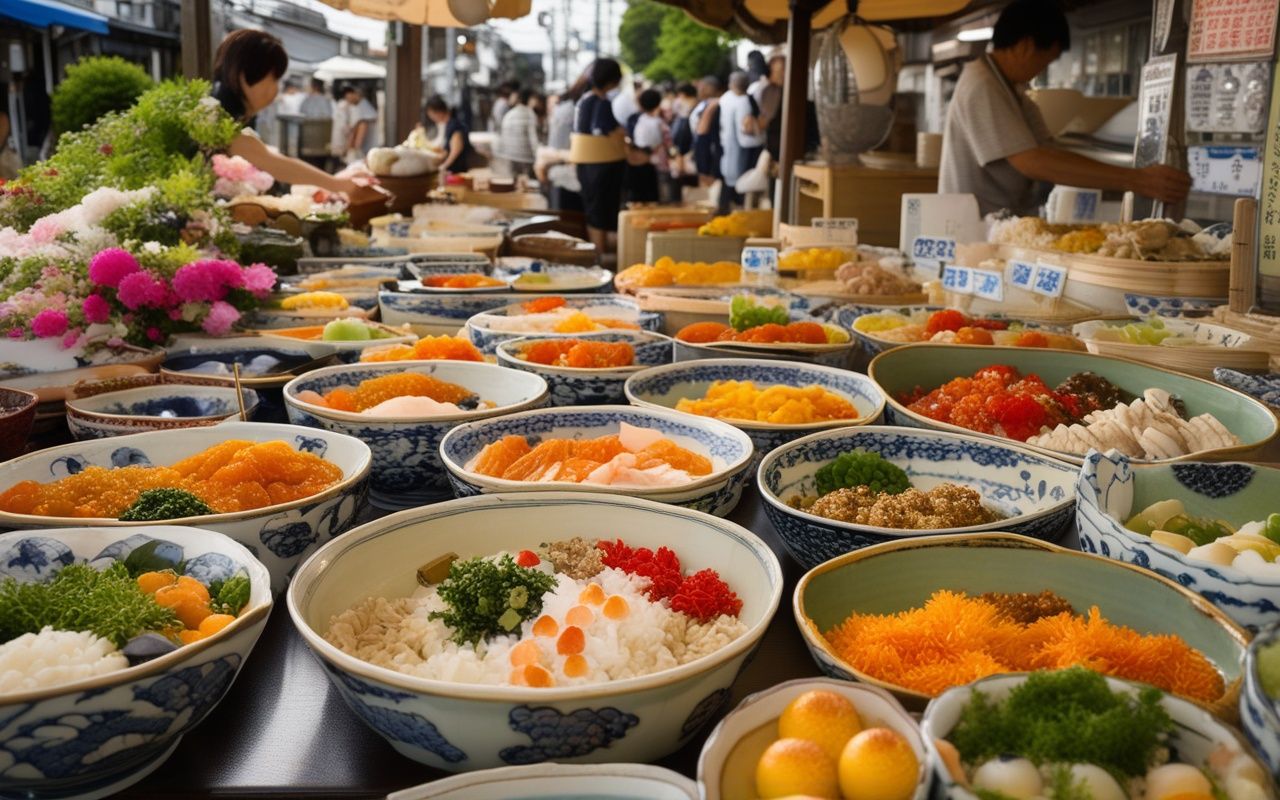
Hiratsuka’s fishing port lands some of the freshest shirasu in Kanagawa. The local specialty is served three ways: shirasu-don (raw whitebait over rice), kakiage (whitebait tempura), and shirasu tamago-don (cooked with egg). In season, the raw version is a pale pink-white mountain of tiny fish with a clean, sweet taste that vanishes on the tongue.
I have eaten shirasu across the Shonan coast — Enoshima, Kamakura, and Fujisawa — and Hiratsuka’s raw bowls are the freshest I have found. The difference is visible: the fish are still translucent, a sign that they were landed that morning.

Where to Eat
- Port-side shirasu shops — Near the fishing port (a 10-minute walk from the station), several shops specialize exclusively in shirasu bowls. Expect ¥900-1,300 per bowl.
- Beach-house lunch — During summer, the beach houses serve shirasu-don and set meals with a sea view. Cheaper than the port shops and perfectly positioned for a beach day.
- Tanabata festival stalls — During the festival, you can find festival versions of shirasu dishes alongside the usual takoyaki and yakisoba. A fun way to try it without a sit-down meal.
- Shonan-style sweets — For dessert, the town has several patisseries using local citrus. The Shonan Gold orange parfaits at the station-adjacent cafes are worth a detour.
Beyond Shirasu
Hiratsuka’s other food claim is the “Shonan Hiratsuka” regional brand — citrus, vegetables, and seafood from the surrounding area. The station building has a small market hall selling local produce, and the town’s izakaya row near the north exit serves excellent local seafood at reasonable prices. For a broader look at the region’s street food, see the Shonan and Kamakura street food guide.
🗓️ Sample Itineraries
Option 1: Tanabata Festival Day (August)
- 10:00 — Arrive at Hiratsuka Station. Walk the kazari-lined main street while it is still calm.
- 11:30 — Lunch at a port-side shirasu shop before the festival crowds build.
- 13:00 — Return to the festival for the afternoon performances and stall hopping.
- 17:00 — Walk to the beach and claim a fireworks spot.
- 20:00 — Head back through the festival, which is spectacularly lit after dark.
- 21:30 — Return train to Tokyo.
Option 2: Beach Day (Summer Weekday)
- 9:30 — Arrive, rent a surfboard or settle into a beach chair.
- 12:00 — Lunch at a beach house.
- 14:00 — Swim and relax; the afternoon is when the water is warmest.
- 17:30 — Watch the sunset from Kokufu Beach.
- 18:30 — Dinner at an izakaya near the station, then return to Tokyo.
Option 3: Autumn Escape (No Crowds)
- 10:00 — Arrive and walk the empty beach.
- 11:30 — Visit the Hiratsuka City Museum of Art (near the beach, free entrance) — a small gallery with rotating modern art shows.
- 13:00 — Shirasu lunch at the port.
- 14:30 — Walk the Sagami River bank under the autumn cherry or foliage colors.
- 16:00 — Late coffee at a beachside cafe, then return.
🗓️ Seasonal Calendar
- Spring (Mar-May): Cherry blossoms along the Sagami River; surfing season begins; clear, crisp days.
- Summer (Jun-Aug): Swimming season, beach houses, and the Tanabata festival in early August. Hot and humid, with afternoon sea breezes.
- Autumn (Sep-Nov): Best season for surfing and beach walks; the crowds vanish; museum season begins.
- Winter (Dec-Feb): Quiet and cold. The beach is empty but beautiful, and the winter light makes for striking photography. See the Kanagawa winter season guide for wider options.
💡 Practical Tips
- Go on a weekday in summer — The difference between weekday and weekend crowds is dramatic, and the beach houses are open all week.
- The station is the hub — Everything (beach, festival, port, museum) is within a 15-minute walk of the station. No bus needed unless you are heading to the far end of Kokufu Beach.
- Check the festival dates before booking — They shift each year; the official Hiratsuka city site publishes them in the spring.
- Bring layers for evening — Summer evenings on the beach cool down fast with the sea breeze.
- Combine with Enoshima — If you have a full day, Hiratsuka’s beach in the morning and Enoshima in the afternoon make a varied Shonan day. The transfer at Fujisawa is straightforward.
Conclusion
Hiratsuka is what happens when you take everything people love about Shonan — the sand, the surf, the sunset — and remove the crowds and the hype. The Tanabata Festival in August is one of Japan’s great street festivals, and the rest of the year the town offers the most relaxed beach day within 70 minutes of Tokyo. It will never replace Kamakura’s temples or Enoshima’s drama, but that is not the point. Hiratsuka is for the days when you just want the ocean, a bowl of the freshest shirasu in Kanagawa, and room to breathe.
FAQ
Q: Is Hiratsuka beach suitable for families with children?
A: Yes. The swimming area is shallow and gently sloped, with lifeguards in summer. The walk from the station is flat and stroller-friendly.
Q: When exactly is the Hiratsuka Tanabata Festival?
A: It is held every year in early August, typically the first or second weekend (Friday-Sunday). Exact dates vary, so check the official city calendar.
Q: How does Hiratsuka compare to Kamakura or Enoshima beaches?
A: Hiratsuka is wider, sandier, and dramatically less crowded. It lacks the scenery and temples of Kamakura, but for a pure beach day or festival experience it is the better choice.
Q: Is the shirasu in Hiratsuka actually different?
A: The fishing fleet lands daily catches, so the raw shirasu is typically fresher than what most Kamakura shops receive. On a good day you will notice the difference immediately.