
Introduction
Having visited these locations multiple times, I’ve gathered practical insights that go beyond typical tourist information. Typhoon season in [Kanagawa](/articles/kanagawa-family-travel-guide/) runs from August to October, but with proper preparation it doesn’t have to derail your trip. This guide covers warning systems, safety procedures, indoor alternatives, and how to stay flexible.
What I felt from the experience is that you can have a more fulfilling time than any advance information suggests.
🌪️ Understanding Japan’s Typhoon Warning System Japan has a five-level warning system. Here’s what each level means for travelers:
| Level | Category | Wind Speed | Required Action | Transport Impact |
|---|---|---|---|---|
| 1 | Early Attention | — | Check latest information | None |
| 2 | Gale/Storm Advisory | 20m/s+ | Stay informed, review plans | Possible delays |
| 3 | Gale/Storm Warning (暴風警報) | 30m/s+ | Cancel outdoor plans | Trains may suspend |
| 4 | Typhoon Warning | 40m/s+ | Seek shelter indoors | Most trains stopped |
| 5 | Emergency Warning (特別警報) | 50m/s+ | Evacuate if instructed | All transport halted |
Kanagawa Typhoon Season Guide 2026nn## OverviewnnTyphoon season affects Kanagawa August-October, peaking in September. Japan’s infrastructure handles them well, Understanding warnings turns stress into manageability.nn## Warning LevelsnnAdvisory: winds over 20m/s — stay informed, Warning: over 30m/s — cancel outdoor plans. Emergency Warning: extreme danger — evacuate if instructed.nn## What to DonnBefore: charge devices, stock water/snacks, check evacuation plan, download Safety Tips app.nnDuring: stay indoors, away from windows. Don’t sightsee. Follow staff instructions. Most pass within 6-12 hours.nn## TransportnnRailways announce planned suspensions. Shinkansen may stop. Buses stop. Taxis scarce. Flights canceled. Check JR East, Odakyu websites.nn## Indoor AlternativesnnCup Noodles Museum, Ramen Museum, Yokohama Museum of Art, Enoshima Aquarium, Minato Mirai shopping.nn## AfternnTransport resumes gradually. Avoid coastal areas until all-clear. Check for damage.nn## Practical notesnnMost typhoons pass within half a day. Treat as rest day — read at cafe, enjoy bath, watch fascinating Japanese typhoon coverage.nn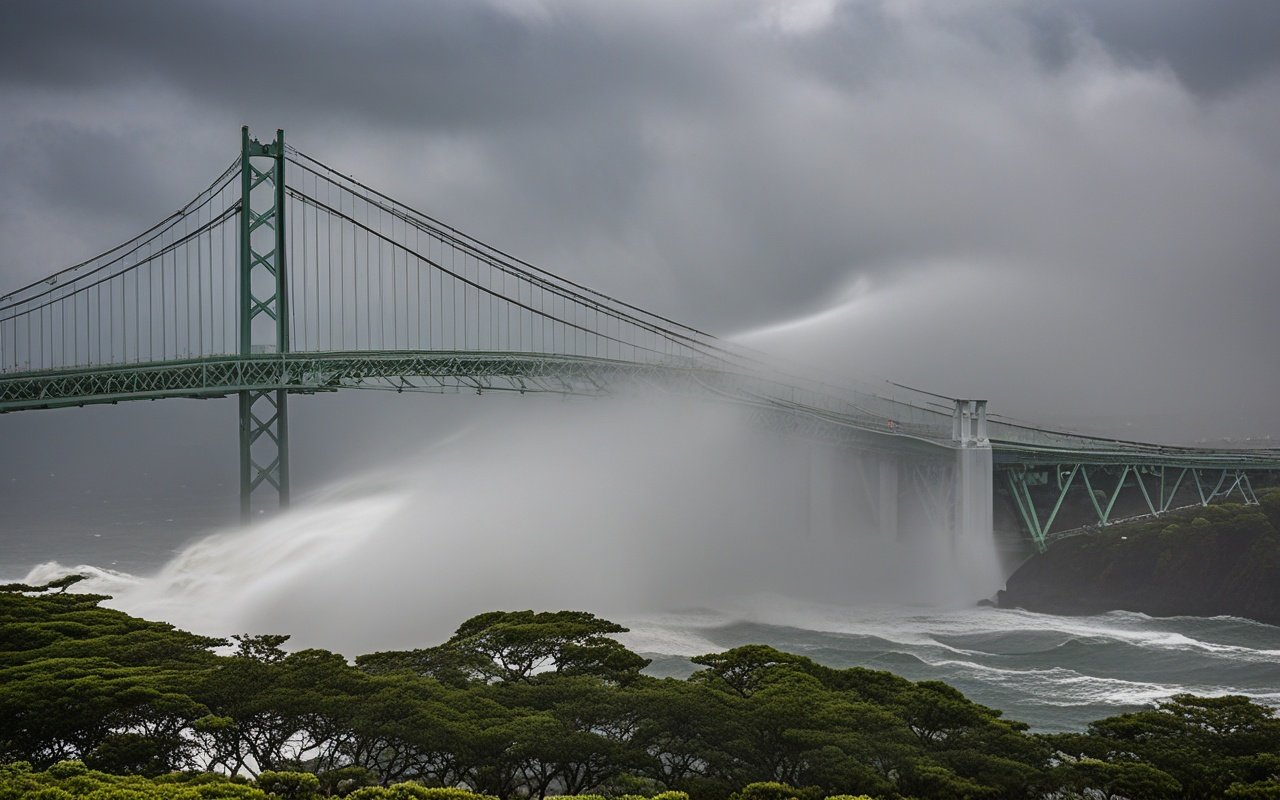

Overview
📋 Before, During, and After a Typhoon
Before Typhoon Arrival (12-24 hours before)
| Action | Reason | Details |
|---|---|---|
| ✅ Charge all devices | Power outages possible | Phone, battery pack, laptop |
| ✅ Stock water & snacks | Convenience stores may close | 2L water per person, non-perishable food |
| ✅ Download offline maps | Internet may be disrupted | Google Maps offline area: Kanagawa |
| ✅ Check hotel evacuation plan | Know where to go | Ask front desk in advance |
| ✅ Inform family/friends | Communication may be disrupted | Share your location and hotel info |
| ✅ Confirm train/fight status | Planned suspensions announced | Check operator websites 12 hours before |
| ✅ Move to indoor areas | Don’t wait until last minute | Head to hotel or indoor attraction |
During the Typhoon (2-8 hours)
- Stay indoors and away from windows — the strongest winds can send debris flying
- Do NOT sightsee or go outside — even short-distance walking is dangerous at level 3+
- Follow hotel staff instructions — they have evacuation protocols
- Most typhoons pass within 6-12 hours — the intense core may last only 2-4 hours
- Watch Japanese typhoon coverage — NHK’s coverage is fascinatingly thorough, with real-time maps and English narration on NHK World

After the Typhoon Passes
- Transport resumes 2-4 hours after the all-clear — check operator websites before heading out
- Avoid coastal areas until official all-clear — storm surges can cause after-effects
- Check for damage before venturing — fallen branches, flooded streets, debris
- Attractions may reopen within 24 hours — outdoor sites need safety inspections first

🏛️ Best Indoor Alternatives in Yokohama (Typhoon-Proof)
If a typhoon hits during your Kanagawa trip, here are the best indoor attractions:
| Attraction | Area | Price | Duration | Why It Works |
|---|---|---|---|---|
| Cup Noodles Museum | Minato Mirai | ¥500 | 2-3 hours | Interactive, unique to Yokohama |
| Ramen Museum | Shinyokohama | ¥380 | 1.5-2 hours | Eat ramen from 9 regional shops |
| Yokohama Museum of Art | Minato Mirai | ¥1,200 | 2-3 hours | World-class exhibitions |
| Shin-Yokohama Skate Center | Shinyokohama | ¥1,500 | 2-3 hours | Ice skating — fun and active |
| Anpanman Museum | Minato Mirai | ¥2,200 | 1.5 hours | Great for families with kids |
| Yokohama Cosmo World | Minato Mirai | Free entry | 1-2 hours | Indoor arcade + ferris wheel (weather permitting) |
| Minato Mirai Shopping | Minato Mirai | Free | 2-4 hours | World Porters, Queen’s Square, Landmark Tower |
My typhoon day plan: Start at Cup Noodles Museum (10 AM, make your own Cup Noodle — a unique souvenir), walk through the underground passage to Landmark Tower (connected underground — no rain), explore Queen’s Square shopping, lunch at one of the 30+ restaurants in the complex, afternoon at the Art Museum, and finish with ramen at the Ramen Museum (accessible via JR to Shinyokohama — the train likely still running during level 1-2).
🏛️ Kamakura & Hakone Indoor Alternatives
| Area | Indoor Option | Address | Price |
|---|---|---|---|
| Kamakura | Kamakura Museum of Literature | 220-1 Jomyoji | ¥500 |
| Kamakura | Kamakura National Treasure Hall | near Tsurugaoka Hachimangu | ¥1,000 |
| Kamakura | Kamakura Municipal Library Cafe | Komachi-dori | Free |
| Hakone | Hakone Museum of Art | 1300 Gora | ¥1,000 |
| Hakone | Hakone Open-Air Museum (partially indoor) | 1121 Ninotaira | ¥1,600 |
| Hakone | POLA Museum of Art | 1285 Kozukayama | ¥1,800 |
| Enoshima | Enoshima Aquarium | 2-19-1 Katasekaigan | ¥2,500 |
🛡️ Travel Insurance: Don’t Skip It
Why it matters: A typhoon-cancelled flight or missed connection can cost you ¥50,000-100,000. Travel insurance with natural disaster coverage costs approximately ¥2,000-5,000 for a week’s trip.
What to check in your policy:
- ✅ Covers natural disaster cancellation
- ✅ Covers additional accommodation costs during transport disruption
- ✅ 24/7 English support hotline
- ✅ Covers medical expenses (including heatstroke — common during typhoon aftermath)
Recommended providers for Japan travel: World Nomads, SafetyWing, or your home country’s travel insurance. Check with your credit card — many premium cards include travel insurance.
📱 Essential Apps for Typhoon Season
| App | Purpose | Cost | English |
|---|---|---|---|
| Safety Tips | Disaster alerts | Free | ✅ |
| Japan Meteorological Agency | Storm tracking | Free (web) | ✅ |
| NHK World | English news + alerts | Free | ✅ |
| JR East App | Train status | Free | ✅ |
| Google Maps | Offline navigation | Free | ✅ |
| Hyperdia | Transport planning | Free/¥600 | ✅ |
Download these before arriving in Japan — they work offline for basic functions.
How to Get There During Typhoon Season
Monitor JR East and Odakyu websites: Railways announce planned suspensions 12-24 hours before a typhoon. Check jreast.co.jp (English available) for updates.
From Tokyo to Kanagawa before a typhoon: Travel early in the day — JR lines may suspend afternoon services. The Shinkansen may stop completely during severe typhoons.
Indoor alternatives in Yokohama: Cup Noodles Museum, Ramen Museum, Yokohama Museum of Art — all accessible via Minato Mirai Line which continues running during light storms.
Returning to Tokyo after a typhoon: Services typically resume within 2-4 hours after the all-clear. Check train apps for real-time updates. Taxis are very scarce during this period. I found that having a prepaid IC card saved me significant time navigating between attractions.
When to Go
Each season in Kanagawa offers a different experience. Spring brings cherry blossoms and mild weather. Summer is beach season with festivals and fireworks. Autumn offers stunning fall foliage and comfortable temperatures. Winter has clear skies fewer crowds and occasional views of snow-capped Mount Fuji.
nn## What to ExpectnnTraveling around Kanagawa is straightforward thanks to the extensive rail network. Trains run frequently from early morning until around midnight. Expect to walk a fair amount – comfortable shoes are essential. Many temples and shrines have uneven stone paths and stairs. Ticket machines at stations have an English language option. If you get lost, station staff are helpful and many speak basic English. Taxis are reliable but expensive; only use them for short trips or when trains have stopped.nnn### Nearby RecommendationsnnIf you have extra time, the surrounding area offers several worthwhile additions to your itinerary. Local tourist information centers can provide maps and suggestions for combining nearby attractions into an efficient route. Many areas offer combination tickets that save money compared to buying individual admission tickets. Consider extending your stay to explore neighboring towns and villages.nnn### Local TipsnnLocals recommend starting your day early to experience attractions before the crowds arrive. Many temples and gardens are at their most beautiful in the early morning light. Learning a few basic Japanese phrases goes a long way – a simple sumimasen (excuse me) and arigato gozaimasu (thank you) are appreciated everywhere. Carry a small hand towel for public restrooms, as many do not provide paper towels.n
Frequently Asked Questions
Q: Q: Should I cancel my entire trip if there’s a typhoon forecast?
A:** A: Not necessarily. Typhoons are localized events that pass within 6-12 hours. Your trip can continue normally before and after. However, if a direct hit is forecast for your travel day, consider arriving a day earlier or shifting by 24 hours. Most airlines offer free rescheduling during typhoon warnings.
Q: Q: Which areas of Kanagawa are most affected by typhoons?
A:** A: Coastal areas (Shonan, Kamakura, Enoshima) experience the strongest winds and storm surges. Inland areas (Hakone highlands) get heavy rain and potential landslides. Central Yokohama is relatively sheltered by the bay.
Q: Q: Do trains really stop during typhoons?
A:** A: Yes — JR East and Odakyu announce planned suspensions 12-24 hours before a typhoon. The Shinkansen may also stop. Services resume 2-4 hours after the all-clear. Check jreast.co.jp for real-time updates.
Q: Q: What happens at hotels during a typhoon?
A:** A: Hotels in typhoon-prone areas have comprehensive protocols. Staff stay on-site 24/7. Backup generators power essential services. Restaurants remain open. Many hotels offer extension stays at the same rate if transport is suspended. The front desk can provide English-language updates.
Q: Q: Can I still visit Hakone during typhoon season?
A:** A: Yes, but the Hakone Ropeway and Tozan Railway are vulnerable to wind suspensions. The ropeway stops when wind exceeds 15m/s. The POLA Museum of Art and Hakone Museum of Art are good indoor options while the outdoor attractions are suspended.
Summary: Typhoon Season Doesn’t Have to Ruin Your Trip
Typhoon season in Kanagawa requires planning, but flexibility is the key. With proper preparation, a weather day becomes an opportunity to explore Japan’s excellent indoor attractions, experience Japanese hospitality at its most attentive, and watch one of nature’s most powerful phenomena safely.
Three takeaways for typhoon season travel:
- Preparation is everything: Download Safety Tips, stock supplies, and know your hotel’s policies before the storm
- Build flexibility into your itinerary: Plan one indoor day per 3-4 days of travel during August-October
- Consider it part of the experience: A typhoon day in Japan is a cultural experience in itself — the thoroughness of the warning system, the efficiency of the recovery, and the resilience of daily life are impressive
For specific indoor alternatives, see our Yokohama Museum Guide and Kamakura Rainy Day Guide. For travel insurance recommendations, consult your current provider or check World Nomads.
My personal exploration of Kanagawa has been incredibly rewarding, and I recommend adding this region to any Japan travel itinerary — the variety of experiences within short distances is what makes it special.
Kanagawa Typhoon Season Guide 2026 — Tra… is your starting point for exploring this part of Kanagawa. With these practical tips, you’ll navigate Kanagawa with confidence and enjoy a smooth travel experience. For more guides, check out our other articles covering Hakone, Kamakura, Yokohama, Shonan, and the Miura Peninsula. —
Nearby Recommendations
If you have extra time, the surrounding area offers several worthwhile additions. Local tourist information centers can provide maps and suggestions. Many areas offer combination tickets. Consider extending your stay to explore neighboring towns.
What to Bring
Smart travelers to Kanagawa pack light and bring layers. The weather can shift from warm to cool within a day. A portable WiFi device or SIM card is essential for navigation. Bring a small notebook for recommendations. Hand sanitizer and tissues are useful. Consider packing a foldable tote bag for souvenirs.
Conclusion
Whether you are planning exploring Kanagawa for the first time or returning for another visit, taking a little extra time to go beyond the obvious sights makes all the difference. During my visit I went with a rough plan and found that leaving room to wander made the trip far more memorable. I hope this guide helps you build an itinerary that fits your pace, and that your time in Kanagawa leaves you with memories worth coming back for.