
Oiso & Ninomiya: A Slow-Travel Retreat on Kanagawa’s Quiet Coast
Overview
An hour from Tokyo’s chaos sits a stretch of coastline that time forgot. Between Oiso and Ninomiya, the Tokaido Line hugs the shore past what was once Japan’s most fashionable beach resort, and today is one of the quietest, most atmospheric places in Kanagawa. I found it by accident — a missed connection at Odawara sent me one stop east, and the sea view from the platform made me cancel my plans.
Oiso’s story is remarkable. In the late 19th century, after the Meiji statesman Ito Hirobumi built a villa here, Oiso became the seaside retreat of Japan’s political and business elite. “Oiso Long Beach” opened in 1885 as one of the country’s first Western-style bathing resorts, and for decades the town hosted summer houses, literary salons, and an international crowd that included, improbably, the first American ambassador to Japan. The 20th century’s economic shifts turned the grand villas into museums and the beachfront into a calm public park — leaving Oiso as a living museum of Japan’s early modern resort era.
Ninomiya, the next town south, is quieter still: a farming and fishing community known for the Myojin-ga-hara coastal woods and the Ninomiya Shrine. Together the two towns form what I have come to think of as Kanagawa’s secret coast — the place you go when you want the ocean without the crowd, history without the queue, and a genuine sense of Japanese small-town life.
This guide covers the history, the beaches, the cafes and food, and the practical details for a slow day trip or a working holiday.
📍 Getting There
Both towns sit on the JR Tokaido Line, about 20 minutes east of Odawara and 70-80 minutes from Tokyo Station. Access is simple: frequent Tokaido Line services stop at both stations, and the coastal sights are a short walk from each platform.

From Tokyo
- JR Tokaido Line from Tokyo Station (70-80 min, ¥1,200) — Take a Rapid or Commuter service and get off at Oiso or Ninomiya Station. This is the most direct route.
- JR Tokaido Line via Yokohama (85 min, ¥1,300) — From Yokohama Station, the Tokaido Line continues west through Oiso toward Odawara.
- Shinkansen + local (60 min, ¥4,000+) — The Tokaido Shinkansen stops at Odawara; change to the local line for the 20-minute hop to Oiso. Faster from Nagoya or Kyoto, but overkill from Tokyo.
Getting Around
The two towns are 5 minutes apart by train (¥140) and the coastal area between them is flat and easily walkable. The beach and the main sights cluster within a 15-minute walk of each station, so no bus is needed for the core loop.

Money-Saving Tickets
There is no special pass for the Oiso area. Standard Tokaido Line tickets are the cheapest option from Tokyo. If you are combining the coast with Odawara or Hakone, the Hakone Free Pass covers the Odakyu-side transport, but for Oiso and Ninomiya the JR local tickets are simplest.

🏛️ Oiso’s History: The Resort of the Meiji Elite
The Story
Ito Hirobumi — Japan’s first prime minister — built his seaside villa in Oiso in the 1880s, and the town became the summer capital of the Meiji establishment. Statesmen, businessmen, and artists followed, constructing grand residences along the shore. Oiso Long Beach, which opened in 1885, is credited as one of Japan’s first modern bathing resorts, with bathing huts, a bandstand, and a clientele that mixed Japanese elites with foreign diplomats.
The visitor experience today is a gentle walk through that heritage. The grand villas are mostly gone, but the town’s museums and parks preserve the atmosphere, and the beachfront retains the calm, slightly formal character of a resort town that has aged gracefully.
What to See
- Oiso Municipal Museum of History (¥300, closed Mondays) — The best introduction. The permanent collection covers the villa era with photographs, documents, and recreated rooms from Ito’s residence. The English brochure is excellent.
- The Ito Hirobumi Villa site — The former residence is a preserved garden and viewing platform overlooking the sea. You can stand where the statesman stood and understand immediately why he chose the spot.
- Oiso Long Beach — Now a public park rather than a private resort, the beachfront retains its historic promenade. Walking it in the late afternoon, with the light over Sagami Bay, it is not hard to imagine the town in its 1910s heyday.
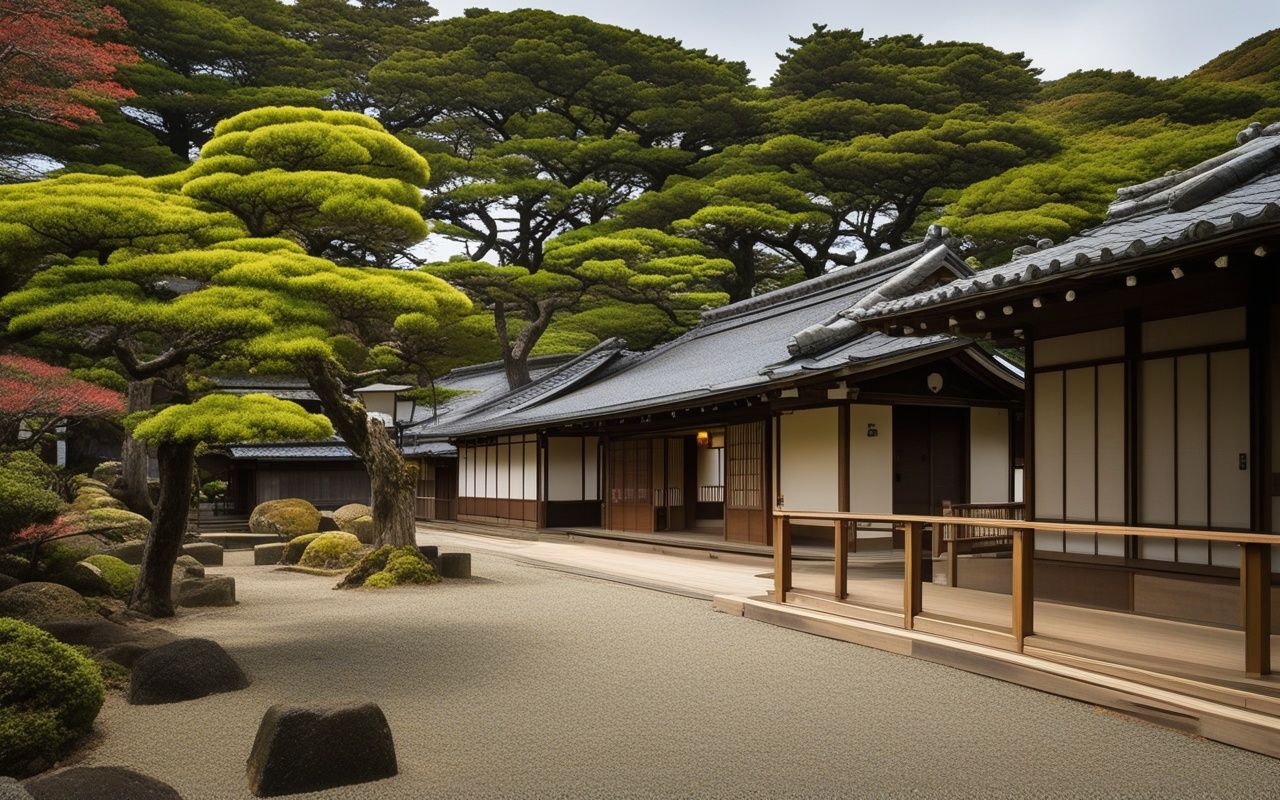
- The villa district streets — The streets behind the beach are lined with mature trees and a few surviving early-20th-century residences. A slow walk here is the town’s true highlight — it feels more like a quiet corner of the French Riviera than suburban Tokyo.
🌊 The Beaches and the Coast
Oiso Beach
Oiso’s beach is wide, sandy, and — the key point — quiet. Swimming season runs July through August with lifeguards and roped areas. Outside summer, the beach is given over to surfers, dog walkers, and people simply staring at the sea. On a weekday in spring, I counted eleven other people on a beach that would hold a thousand in Kamakura.
Ninomiya and Myojin-ga-hara
Ninomiya’s coast is fronted by the Myojin-ga-hara woods — a protected coastal forest of black pines that has grown for centuries as a windbreak. Walking trails thread through the trees, opening onto small coves and rocky headlands. The combination of forest and sea is unusual in Kanagawa and feels genuinely wild.
What to Do
- Beach walking — The shoreline between the two towns is about 3 km and walkable in under an hour. This is the core slow-travel activity: no attractions, just sea, sky, and space.
- Myojin-ga-hara trails — The forest paths are flat, shady, and quiet. Look for the historic stone markers that once guided travelers along the old coastal route.
- Surfing — Ninomiya has a small but dedicated surf community. The waves are softer than Chigasaki’s, making it a forgiving place to learn. See the Shonan surfing guide for the coast-wide picture.
- Sunset watching — Both towns face due south-west. The sunsets are consistent and unobstructed; the best view is from the Oiso beachfront or the Myojin-ga-hara headland.
- Cycling — The flat coastal road is ideal for bicycles. Rental options are limited, so consider the Shonan cycling routes if you want a longer ride with rentals.
The Ninomiya Shrine
Ninomiya’s namesake shrine sits in the town center, a short walk from the station. It is one of the region’s older shrines, with a calm, mossy atmosphere and a legend connected to the area’s agricultural history. Worth 20 minutes if you are walking through town.
☕ Cafes and Food: The Slow Life
The Cafe Scene
The Oiso and Ninomiya cafe scene is a recent and welcome addition. Several shops in old buildings near the stations and the beach serve excellent coffee and light meals, aimed squarely at the workation crowd and weekend slow-travelers.
- Oiso beachfront cafes — Two or three shops with sea views serve coffee and brunch. The atmosphere is unhurried; laptops are welcome.
- Ninomiya village cafes — A handful of converted houses near the shrine serve coffee, homemade cakes, and light lunches. These are the best places for a genuinely local meal.
- Wi-fi and power — Most of the newer cafes have reliable wi-fi and power outlets, which makes the area workable for remote work. See the Kanagawa wifi guide for connectivity notes across the prefecture.
Food
- Seafood — The local fisheries supply the izakaya near both stations. The shirasu (whitebait) here is less famous than Shonan’s but equally fresh.
- Kamaboko — Being close to Odawara, the region has excellent fish-cake shops. The Odawara kamaboko guide covers the craft.
- Kaiseki at the ryokan — If you stay overnight, the area’s small ryokan serve multi-course dinners featuring local seafood and vegetables. This is the ultimate slow-travel experience.
- Coffee culture — The kissaten (old-style coffee shops) of Oiso date from the resort era and remain charmingly unchanged. A coffee at one of these is a mini time-trip.

🗓️ Sample Itineraries
Option 1: The Slow Day Trip
- 9:30 — Arrive at Oiso Station. Coffee at a kissaten near the station.
- 10:30 — Oiso Municipal Museum of History (1 hour).
- 11:45 — The Ito Hirobumi Villa site and garden.
- 12:30 — Lunch at a beachfront cafe or an izakaya near the shore.
- 14:00 — Walk the beach promenade toward Ninomiya (1 hour).
- 15:15 — Myojin-ga-hara woods trail and headland.
- 16:30 — Ninomiya Shrine, then a late coffee in the village.
- 17:30 — Sunset from the beach.
- 18:30 — Return train from Ninomiya or Oiso.
Option 2: The Workation Weekday
- Morning — Arrive on a weekday and set up at a beachfront cafe with wi-fi. Work until lunch.
- 13:00 — Lunch, then a working afternoon at a second cafe (or the library near the station, which has quiet desks and free wi-fi).
- 17:00 — Shut the laptop and walk the beach for the sunset.
- 18:30 — Dinner at a local izakaya, then the return train. Total cost for a productive day: roughly ¥3,500 including meals and coffee.
Option 3: The Overnight Retreat
- Day 1 — Arrive late morning, museum and villa district, check into a ryokan near the coast, kaiseki dinner.
- Day 2 — Early beach walk, breakfast, Myojin-ga-hara trail, lunch, return. See the Kanagawa ryokan guide for booking advice and etiquette.
📅 Seasonal Notes
- Spring (Mar-May) — Mild and clear. The villa gardens and coastal woods are at their best, and the beaches are empty.
- Summer (Jun-Aug) — Swimming season; still dramatically quieter than eastern Shonan. The cafes are busiest, but the beach remains roomy.
- Autumn (Sep-Nov) — The best season: perfect walking weather, calm seas, and the coastal woods in gold. Crowds are negligible.
- Winter (Dec-Feb) — Cold and bracing. The light is spectacular, the surf is up, and the izakaya are at their coziest. The museum is warm and quiet.
💡 Practical Tips
- Go on a weekday — The towns are quiet any day, but weekdays are nearly empty, and the workation cafes have room.
- Walk the coast — The 3 km between the two towns is the best part of the trip. Do not skip it in favor of sights.
- Check cafe hours — Many of the best cafes close by 17:00-18:00. Plan your work session or coffee break before that.
- Carry cash — Smaller cafes and shops are cash-only.
- Combine with Odawara — The Tokaido Line puts Odawara’s castle town just 20 minutes west. A two-stop itinerary works well for a longer day.
- Respect the quiet — This is a residential area first. Keep voices down, especially in the villa district.
Conclusion
Oiso and Ninomiya are not destinations you rush through; they are places you exhale into. An hour from Tokyo, they offer what the rest of Kanagawa’s coast has largely lost: empty beaches, a living slice of Meiji-era history, and the space to do nothing at all. Whether you come for the villa-era history, a working holiday by the sea, or simply the quietest sunset within reach of the capital, this stretch of coast delivers exactly what it promises — nothing more, and nothing less.
FAQ
Q: Is Oiso worth visiting instead of Kamakura?
A: That depends on what you want. Kamakura has temples, shops, and energy; Oiso has history, space, and calm. For a slow, uncrowded seaside day — especially with an interest in Meiji-era history — Oiso is the better choice.
Q: Can I work remotely in Oiso?
A: Yes. Several beachfront and village cafes offer wi-fi and power, and the station-area library has quiet work desks. Weekdays are ideal.
Q: How long should I spend?
A: A full day comfortably covers both towns and the coast between them. Overnight stays work well if you want the ryokan dinner experience.
Q: Is the beach good for swimming?
A: Yes, in season (July-August), with lifeguards and roped areas. Outside summer, the water is safe for wading but cold.