
Shonan SUP & Marine Activities Guide: Paddle, Kayak, and Sail
Overview
Shonan’s coastline — the arc of bay from Kamakura through Enoshima to Chigasaki — is one of Japan’s great playgrounds for water sports. Beyond surfing, which has its own culture here, the bay offers calmer options that are perfect for beginners: stand-up paddleboarding (SUP) on the protected waters near Enoshima, sea kayaking in the quiet coves of Hayama, and sailing courses that have trained generations of Japanese sailors.
I came to SUP relatively late, after years of watching surfers from the sand. A friend persuaded me to join a morning SUP session off Enoshima, and within twenty minutes I understood the appeal: standing on the water, gliding over the glassy surface with the island behind you and Mount Fuji on the horizon. It is the most accessible water sport in Japan, and Shonan is its best classroom.

This guide covers the SUP, kayak, and sailing options across Shonan — where to go, what it costs, when to visit, and how to make the most of your session.

🏄 What You Need to Know About SUP
Why SUP Works in Shonan
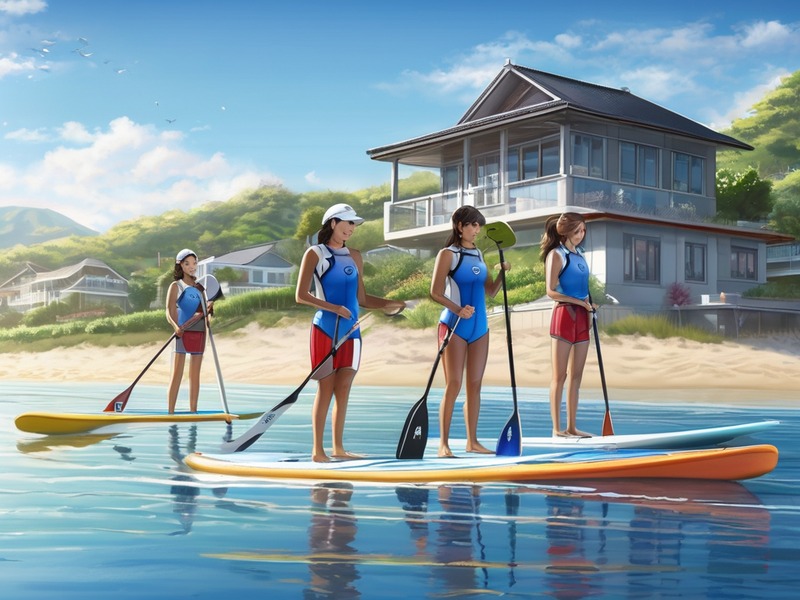
SUP (stand-up paddleboarding) is ideal for Shonan’s protected waters. The bay side near Enoshima and the coves around Hayama are calm for most of the year, and the shallow shelving beaches make for easy launches. Even on days when the surf is up at Kugenuma, the sheltered water near the islands stays manageable for beginners.
The learning curve is gentle. On a typical first session, you spend 10 minutes on shore learning the basic stance and paddle stroke, then 5 minutes on your knees before standing up. Most people are standing within the first half hour. The equipment — board, paddle, and wetsuit or rash guard — is always included in lesson prices.
What It Costs
- Group lesson (1.5-2 hours): ¥5,500-8,800 per person, including board, paddle, wetsuit, and life jacket.
- Private lesson: Roughly ¥12,000-18,000 per hour.
- Rental only: ¥2,500-4,000 per hour for experienced paddlers.
- Mega SUP (large group boards): From ¥33,000 per board for 6-8 people.
🏝️ Where to Paddle: The Best Spots
Enoshima Bay
The classic Shonan SUP experience. Launching from the beaches around Katase-Enoshima, you paddle along the island’s coastline with views of the sea caves, the lighthouse, and Mount Fuji on clear days. The water is protected from the open ocean, making it the best beginner spot in Shonan.
- Launch point: The beaches near Katase-Enoshima Station on the Odakyu Line.
- Best time: Early morning for glassy water and the least wind.
- Schools: Several operators run from the beach; the larger ones offer English-friendly instruction and online booking.
Hayama and the Quiet Coves
A short ride from Kamakura, Hayama’s sheltered coves offer the calmest paddling in Shonan. Sea kayaking here is especially rewarding — you can paddle around small islands, look down through crystal-clear water at rocky reefs, and enjoy views of Mount Fuji that rival any in the prefecture.
- Launch point: Morito Beach and the nearby coves in Hayama.
- Best for: Sea kayaking, SUP cruising, and small-group tours.
- Schools: The Hayama Sea Kayak Club and similar operators offer half-day tours from around ¥6,000-10,000.

Kugenuma and the Open Coast
The coastline from Kugenuma west is more exposed, with real waves, but the calm days are superb for SUP cruising along the beachfront. This is the spot for experienced paddlers who want a longer session with a sea view.
- Launch point: Kugenuma Beach, near Kugenuma-Kaigan Station.
- Best for: Longer paddles and photography sessions.
- Note: Check wind conditions — offshore winds make this coast uncomfortable for beginners.
🛶 Sea Kayaking: The Deeper Adventure
Why Kayak
Sea kayaking gets you further than SUP — into coves, around islands, and along cliffs that you cannot reach on foot. In Shonan, the Hayama coast is the kayaking heartland, with tours that combine paddling, snorkeling, and small-island exploration.
I took a half-day kayak tour from Hayama on a clear October morning. We paddled along the cliffs, rounded a small island, and stopped at a quiet cove where we could see fish in the clear water below the kayak. The pace was gentle, the guide was attentive, and the feeling of having the coast to ourselves was the highlight of my year in Shonan.
Tours and Prices
- Half-day tours: ¥6,000-10,000 per person, including kayak, paddle, life jacket, and guide.
- Full-day tours: ¥12,000-14,000, typically including lunch and snorkeling gear.
- Island-hopping tours: Some operators offer trips around the small islands off Hayama.
What to Bring
- Swimsuit or quick-dry clothing
- Sunscreen and a hat
- Water in a sealed bottle
- A dry bag for phone and camera (many operators provide one)
⛵ Sailing: Shonan’s Quiet Tradition
The Sailing Scene
Shonan has a deep sailing tradition, centered on the yacht harbors at Enoshima and the sailing clubs along the coast. The bay’s steady breezes and protected waters made it a venue for the 1964 Tokyo Olympics’ sailing events, and the sport remains popular with locals and a growing number of international visitors.
Sailing here is not just for experts. Several clubs offer introductory sessions where you join an instructor on a small keelboat or dinghy, learn the basics of trimming sails and steering, and spend an hour or two on the water.

Where to Sail
- Enoshima Yacht Harbor — The historic venue, with sailing schools and day sails.
- Hayama Marina — A full-service marina with lessons and boat rentals.
What It Costs
- Introductory session: Around ¥8,000-15,000 for 2-3 hours.
- Multi-day courses: From ¥30,000-60,000 for a weekend introduction course.
📅 Seasons and Conditions
The Season
- April to October — The main season. Water temperatures rise through spring, and summer brings warm, calm conditions ideal for beginners.
- July and August — The busiest months. Beaches are crowded and swimming zones are active; some operators restrict where you can paddle.
- November to March — Cooler but often calmest. Air is clearest (best Fuji views), but you need a full wetsuit. Several schools run reduced winter schedules.
Weather and Wind
- Mornings are best — The sea is calmest before 10:00, before the afternoon sea breeze builds.
- Check wind forecasts — The afternoon southwest wind can make paddling back harder than paddling out. Schools will cancel in strong conditions.
- Rain is fine — Light rain does not stop sessions; thunderstorms do.
👟 What to Bring and Wear
The Essentials
Most operators provide board/kayak, paddle, life jacket, and wetsuit (or rash guard in summer). You need to bring:
- Swimsuit — Worn under the wetsuit.
- Towel — For the post-session shower.
- Sunscreen — Essential, even on cloudy days; the reflection off the water is intense.
- Sandals — For the beach and the shower.
- Change of clothes — You will get wet.
The Etiquette
- Listen to the guide — Paddling areas are marked for safety and to keep clear of swimmers and boats.
- Respect the environment — Do not touch marine life or disturb wildlife.
- Ask about tattoo policies — Some operators and onsen-adjacent facilities restrict tattoos; ask when booking.
🗓️ Sample Sessions
Morning SUP at Enoshima (3 hours)
- 8:30 — Meet at the beach near Katase-Enoshima. Brief land lesson.
- 9:00 — On the water. Paddle along the island coast, practice turns and balance.
- 10:30 — Short break with a drink, then a guided paddle toward the sea caves.
- 11:30 — Return to shore, shower, and a beachside breakfast.
Half-Day Kayak Tour at Hayama (4 hours)
- 9:30 — Meet at Morito Beach. Gear up and kayak briefing.
- 10:00 — Paddle along the cliffs and around the small islands.
- 11:30 — Snorkel stop at a quiet cove.
- 12:30 — Lunch break, then paddle back to the beach.
💡 Practical Tips
- Book in advance — Summer weekend sessions sell out days ahead. Book at least 2-3 days before.
- Go on a weekday — Weekday mornings are dramatically quieter and often cheaper.
- Start in a calm spot — Choose Enoshima Bay or Hayama for your first session; save the open coast for later.
- Hydrate and protect — Paddling is more exercise than it looks; bring water and reapply sunscreen.
- Combine with beach time — Most launch points are near excellent cafes and beaches. See the Shonan beach guide for post-paddle plans.
🔗 Related Guides
- Surfing: For the wave-riding side of Shonan, see the Shonan surfing guide and the surf lessons guide.
- Beaches: The Shonan beach guide covers the best beaches along the coast.
- The surf coast: Kugenuma and Tsujido, birthplace of Japanese surfing, is the western neighbor of the SUP spots.
- Kamakura’s coast: The beaches of Kamakura offer additional calm-water options.
Conclusion
Shonan’s water is its greatest asset, and SUP, kayaking, and sailing are the best ways to experience it. The bay is forgiving enough for complete beginners, beautiful enough to feel like a holiday, and organized enough that a single afternoon session can take you from the sand to standing on the water with Mount Fuji on the horizon. Whether you join a morning SUP class off Enoshima or paddle the quiet coves of Hayama, you will find that Shonan’s best views are best reached by paddle.
FAQ
Q: Do I need to be fit or able to swim well to try SUP?
A: No. You paddle on your knees first, and most operators require only basic water confidence. Life jackets are provided and instructors stay close.
Q: What is the best time of year for a first session?
A: May to October offers the warmest, calmest conditions. Early morning sessions are calmest on any day.
Q: How much does a SUP lesson cost?
A: Group lessons run about ¥5,500-8,800 for 1.5-2 hours, with all equipment included. Private lessons cost more.
Q: Can I do these activities without speaking Japanese?
A: Yes, at the larger operators. The bigger schools on Enoshima offer English-friendly instruction and online booking, and the tours are designed to be accessible through demonstration.